Define
Name the production question before comparing formats.
Our approach
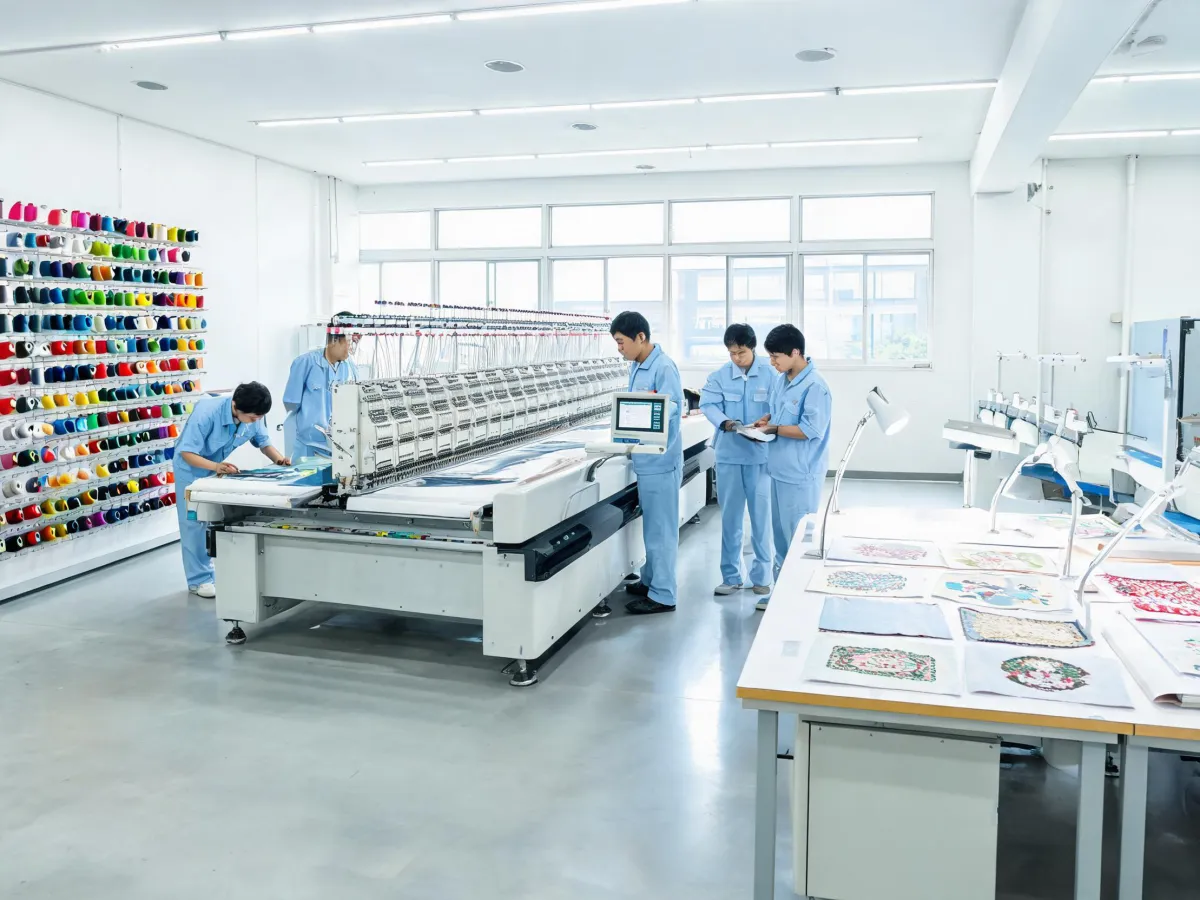
Embroidery equipment sits inside a larger system of artwork, material, stabilizer, frames, thread, operators, maintenance, and due dates. Our role is to make those dependencies visible before a line is expected to perform.
See the application method →Production thinking
A machine brochure can state head count, needles, embroidery area, and optional frames. It cannot predict the entire result of a dense design crossing a jacket seam, a small cap order with repeated changeovers, or a fine knit that reacts to hoop pressure. Those outcomes depend on a controlled combination of hardware, digitizing, material preparation, and operator response.
“A useful demonstration leaves a record another shift can repeat.”
That sentence defines our planning discipline. First, the application brief names the actual garment, design size, stitch count, color sequence, placement tolerance, batch pattern, and intended operating window. Next, a sew-out records needle, thread, stabilizer, frame, tension, speed ceiling, stops, trims, and handling. Finally, inspection covers registration, puckering, thread damage, reverse-side appearance, and repeatability across more than one sample.
This method is deliberately conservative. Nominal stitch speed does not equal finished pieces per hour, and a clean sample does not establish performance across every fabric lot. Production managers still need to account for loading, thread changes, operator walking, maintenance, rework, and the consequence of stopping several heads together.
Name the production question before comparing formats.
Use the intended material, design, and finishing expectation.
Keep settings and inspection results attached to the approved job.
Give operators stop conditions and an escalation route.

Capability transfer
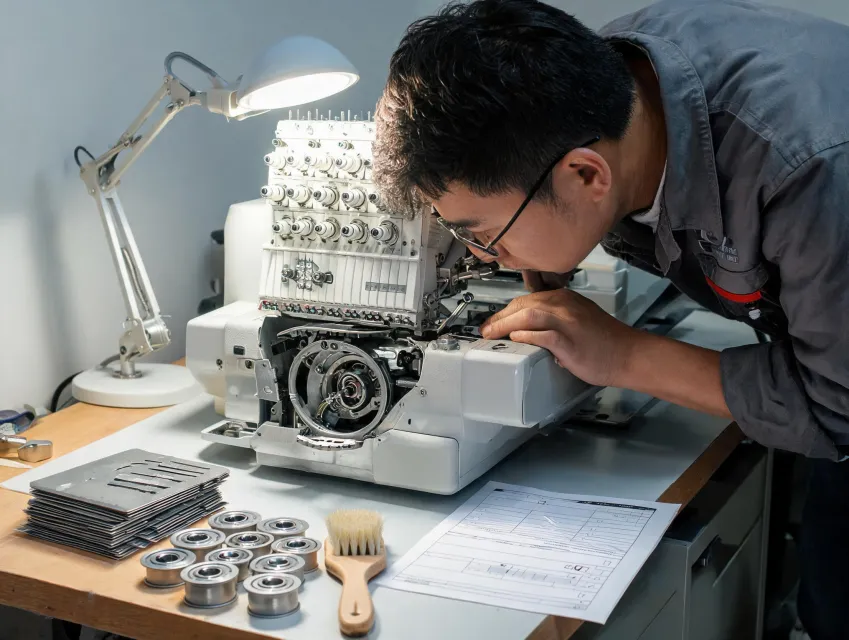
A handoff is incomplete if the team only knows which green button starts the job. Training should distinguish artwork problems from hooping, needle, thread, tension, frame, or material problems. It should also show when to stop rather than continue producing rejects.
For a repeat program, the approved setup sheet becomes the reference: design revision, garment, stabilizer, thread, needle, frame, placement, speed ceiling, and inspection sample. When a deviation appears, the operator changes one controlled input at a time and records the outcome. This is slower than guessing for a few minutes and faster than losing an entire run.
Service boundaries
It does not guarantee identical output across fabric lots, eliminate thread breaks, or turn a maximum machine rating into continuous production. It does not replace local electrical review, guarding, ventilation, operator safety procedures, or the maintenance schedule supplied for the installed model.
Access to parts, field service, and training varies by market. Buyers should confirm the responsible distributor, warranty scope, response path, consumable availability, software compatibility, utilities, and installation conditions in writing before purchase.
Make the next conversation concrete
Include samples or files only through an approved follow-up channel. The first inquiry should identify material, placement, order size, quality concern, and the machine format being considered.