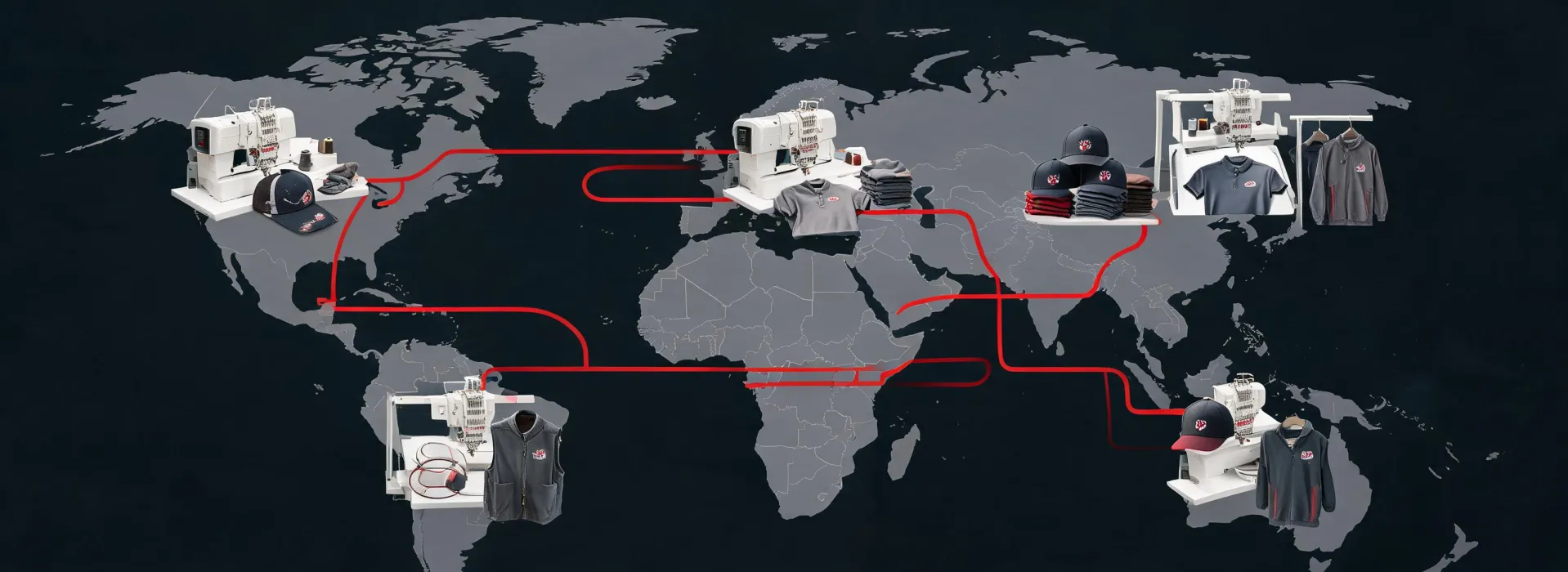
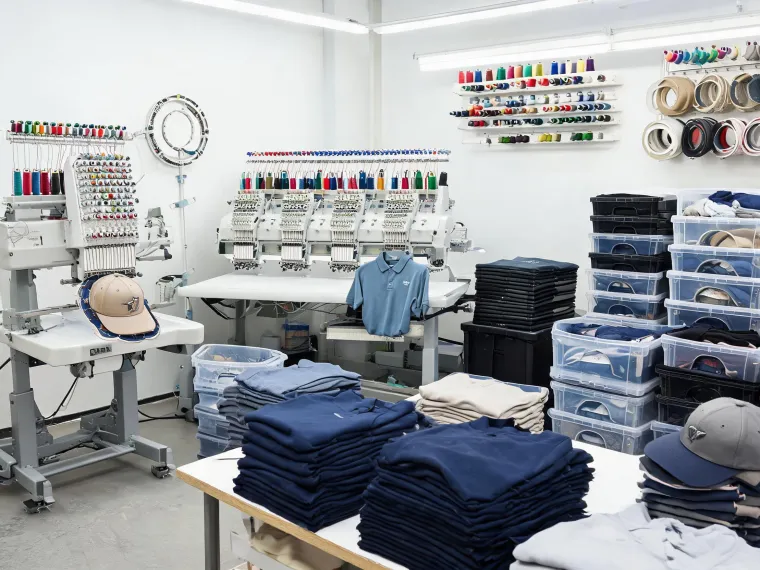
Regional operating patterns
The Same Design Can Enter a Different Factory System
These scenarios are planning profiles, not market-size claims. Confirm local distributor coverage, warranty terms, training language, electrical requirements, and import obligations before purchase.
Short Runs, Personalization, and Mixed Goods
Contract decorators and branded-apparel operations may switch repeatedly among caps, polos, jackets, bags, and names. A machine comparison should separate sewing time from framing, file setup, thread changes, loading, unloading, and inspection. A larger head count can improve repeated runs but can also magnify downtime when one defect stops the line.
Trial at least one structured cap and one unstable garment if both are in scope. Document dealer response coverage, training availability, compatible frames, and the stocking plan for needles, bobbins, hooks, and routine wear items.
Traceable Workwear and Premium Decoration
Workwear, club, fashion, and promotional programs often require repeatable color, placement, and finish across recurring orders. Preserve the approved design revision, thread reference, stabilizer, hoop, placement template, machine settings, and inspection sample. Safety marking or regulated protective performance must be handled through the applicable garment and certification process; embroidery equipment does not certify the finished garment.
Confirm local electrical conformity, guarding, documentation language, operator training, noise expectations, and disposal practices with the responsible supplier and facility team.
Scaled Apparel and Multi-Head Utilization
Factories handling repeated panels or finished garments can benefit from multi-head production when artwork, material, and loading remain stable. Head count should still be balanced against floor layout, operator reach, frame preparation, thread replenishment, maintenance windows, and the cost of line-wide stops.
Use several repeated sew-outs rather than one sample. Track thread breaks per design, trims, operator interventions, rejected placements, and finished pieces over a representative shift window. Nominal stitches per minute remains a machine setting, not a complete throughput metric.
One Identity System Across Multiple Plants
Distributed programs need a controlled master file and local proofing. Material substitutions, thread lots, garment construction, and operator methods can change the appearance even when the design file is identical. Establish a central approval sample, named revision owner, measurable placement tolerance, and an escalation path for local deviations.
Shipping a setup sheet is insufficient without verifying local frames, machine compatibility, utilities, maintenance capacity, and training. A pilot order at each site exposes differences before the full program is released.