Application Definition
We document design size, stitch count, thread type, color changes, garment construction, placement, batch pattern, and acceptable finish. Special fixtures and cap frames enter the discussion before the trial is scheduled.
Production services
Machine selection becomes more useful when the discussion includes garments, designs, stabilizers, target output, staff experience, utilities, and floor constraints. Our review sequence turns those inputs into a documented trial plan rather than a generic product presentation.
Book a Workflow Review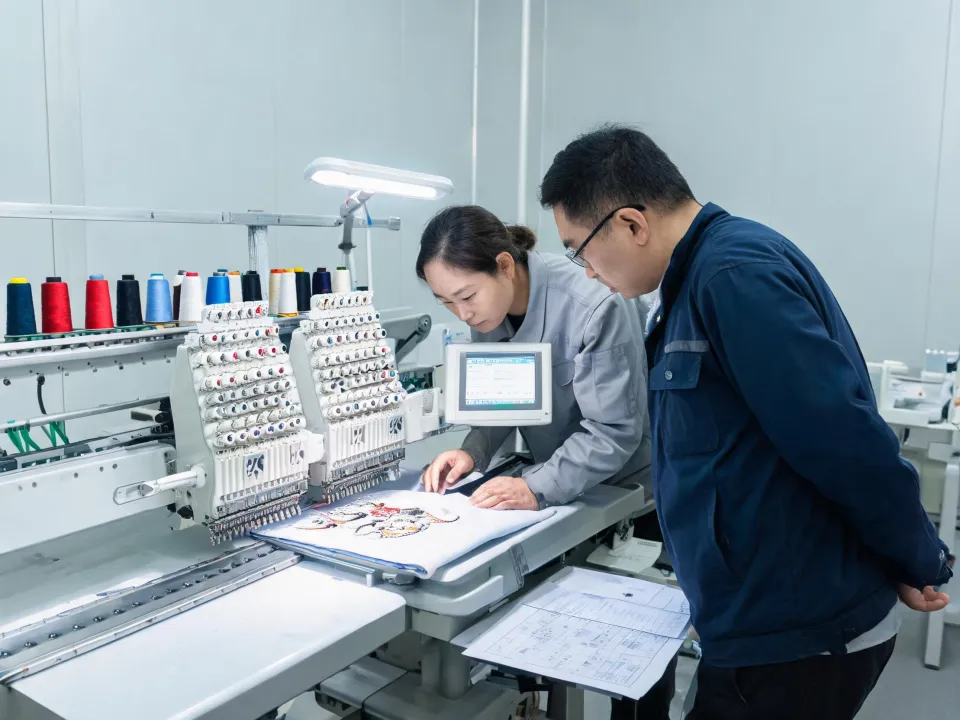
Four operating questions
Each engagement produces a practical handoff: what was tested, what passed, what remains conditional, and who owns the next action.
We document design size, stitch count, thread type, color changes, garment construction, placement, batch pattern, and acceptable finish. Special fixtures and cap frames enter the discussion before the trial is scheduled.
The trial records machine settings, needle, backing, hooping method, speed ceiling, trims, thread breaks, and handling time. A nominal maximum speed is not treated as sustained output.
Operators receive an approved setup sheet, inspection points, cleaning intervals, stop conditions, and an escalation route. Training focuses on repeatable work rather than memorizing one demonstration.
Preventive routines are aligned to shift pattern, lint load, lubrication points, needle hours, consumables, and fault history. Parts stocking is discussed against consequence and lead time.
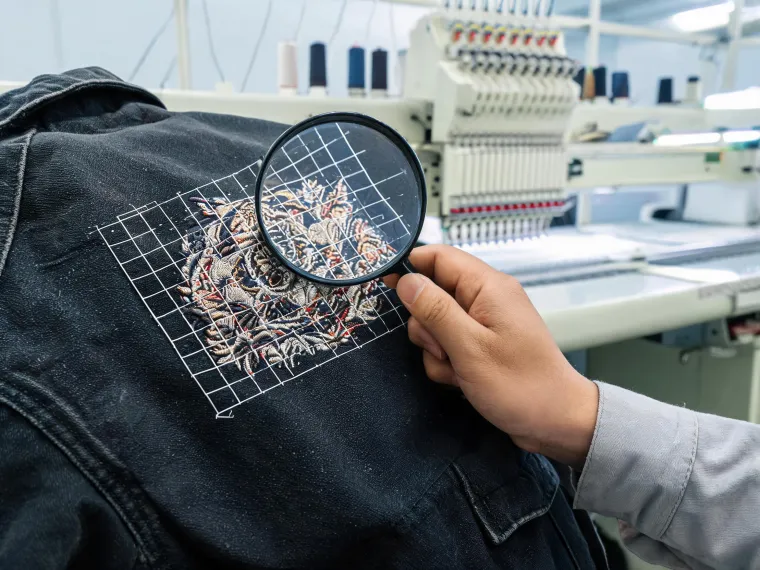
Background: a workwear program combines compact lettering, dense fills, and heavy seams near the placement. Process: test the actual shell fabric with proposed needle, thread, stabilizer, hoop tension, underlay, and speed limit; record registration and reverse-side condition after every change. Result: the production team receives an approved setup window and a clear rejection reference. The exercise does not guarantee every garment because seam position and material lots can still alter needle deflection and feeding.
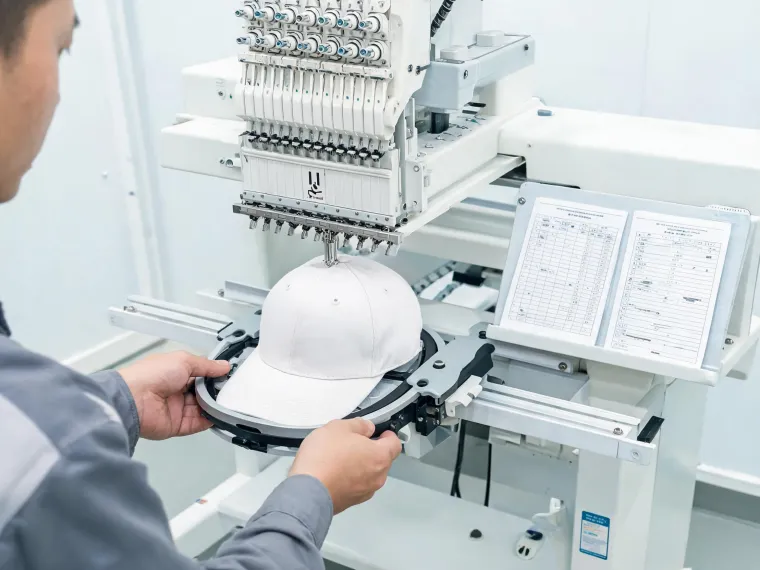
Background: a decorator runs many short cap orders and loses time between designs. Process: separate file loading, thread changes, framing, placement confirmation, sewing, and unloading into measured steps. Test structured and unstructured crowns independently because their seams and support behave differently. Result: management can compare added heads with reduced changeover work using observable minutes, while operators gain a standard framing checkpoint. Very small runs may still favor a flexible cell over a larger multi-head line.
Counts describe the Tajima review framework shown on this page, not universal machine performance.
Next working session
A representative problem job reveals more than a simple logo on easy fabric. Include the intended material, placement, finished quantity, deadline pattern, and current rejection reason.